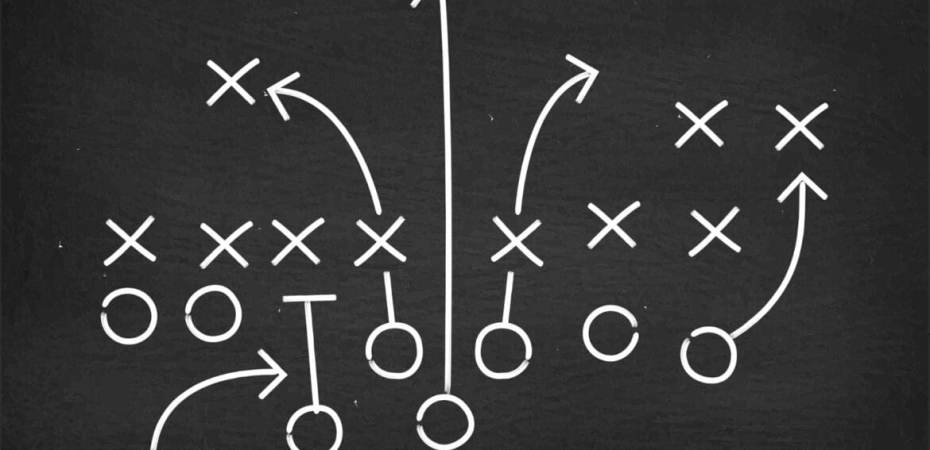
As the dust settles on another Super Bowl weekend, the National Football League continues to cement its status as a $100+ billion enterprise comprised of 32 highly profitable business units, each valued in the billions. Yet, as the NFL demonstrates year after year, sheer profitability does not equate to operational success. In an environment with a single ultimate outcome, many franchises fall short, respond by replacing their coaching staff, and assume that leadership change alone will close the performance gap between being a loser and a winner.
Most teams, like many businesses, have a defined strategy to implement. Too often, that strategy is copied or borrowed—modelled after a winning competitor—with the idea that duplication will produce equivalent results. What is frequently underestimated is the handoff between strategy to execution. When results fall short, the individual charged with executing the strategy becomes the scapegoat. And within two years, the cycle resets, reinforcing the false narrative that the strategy was sound but poorly executed.
In actuality, it is more nuanced. Strategy without execution is not practical. Execution without alignment is purposeless. Sustainable performance requires both strategy and execution working in unison.
One of the most insistent failures in the NFL—and in business—is the assumption that hiring talent from a winning organization guarantees success. Leaders are recruited from high-performing environments and expected to “install” a winning formula, yet they are surrounded by teams that neither understand nor fully support the new operating model. The organization remains unaltered while expecting extraordinary results.
New leaders are often hired with expectations of rapid turnaround, yet the organization lacks the structure, staffing, or capabilities to move at the required speed. The gap between vision and capacity creates tension, misinterpretation, and burnout.
When performance metrics become the sole diagnostic tool, organizations treat symptoms rather than root causes. Leadership turnover increases, institutional knowledge erodes, and long-term value creation suffers.
To integrate strategy and execution, leaders must show clear communication between those setting direction and those responsible for delivery. Winning—whether in the NFL or in business—is never the result of a single individual. It is the outcome of coordinated effort across the enterprise.
Organizations must invest in talent development, role clarity, and continuous learning to ensure teams possess the skills needed to execute evolving strategies. Equally important is building genuine buy-in at every level. Change succeeds when people understand not just what is changing, but why it matters and how they contribute.
Sustained success is not about finding the next leader. It is about building an organization capable of executing strategy, absorbing change, and winning together.
Good Luck this weekend, Seattle!
Brian Nadon
Learn, Unlearn, Relearn
 Don’t Let Your Past Kill Your Future